If you're after a quiet Formentera, most of what's worth seeing is in the east of the island: the La Mola lighthouse, El Pilar de la Mola, Cala en Baster and Caló des Mort, plus Migjorn beach, Cala Saona and the tracks you can explore on foot or by bike.
There are two ways to get to know Formentera. One is rush hour, full car parks and coves where it's hard to find a spot for your towel. The other is slower and quieter, and it starts as soon as you move away from the busiest areas. If you're planning your first trip to Formentera, this guide will help you see it differently: the places that are really worth it, how to get around and how to plan your days so that time, at last, slows down.
Quiet Formentera: why the island is best away from the crowds
Formentera is a small island: you can drive from one end to the other in just over half an hour. That's exactly why almost everyone ends up in the same places, especially in high season. The northern beaches, such as Ses Illetes and Llevant, and the villages of Es Pujols and Sant Francesc get most of the day visitors. They're lovely, yes, but they're also the busiest in the middle of the day.
The other Formentera is in the east, on the La Mola plateau and around it. It's the highest part of the island and the one that keeps the old rhythm: dirt tracks, dry stone walls, juniper and rosemary, and the turquoise sea in the background.
One thing is worth understanding: you don't enjoy this island by rushing from cove to cove. You enjoy it by staying put, getting up a little early, leaving the afternoon open and heading home as the sun goes down. The Formentera that gets under your skin isn't the one of ten-stops-a-day lists, but the one of long, unhurried hours.
Must-see places in the quieter side of Formentera
These are the places we recommend to anyone who wants to get to know the island without the stress. They're not ordered by fame, but by what they bring to a few calm days.
La Mola lighthouse
At the eastern tip of the island, on cliffs that drop almost vertically into the sea, stands the La Mola lighthouse. It's the easternmost point of Formentera and one of its most striking landscapes. If you can, go at sunrise, when the sun comes up in front of the lighthouse and there's hardly anyone around. Outside August, late afternoon is also a good option.
El Pilar de la Mola
A few minutes from the lighthouse, El Pilar de la Mola is a small village of whitewashed houses where life moves slowly. During the season it hosts its craft market, and it's a good place for a drink without checking the time. The tracks across the plateau start around the village and are ideal for walking.
Cala en Baster
In the north-east, Cala en Baster is a small, sheltered cove with no big facilities, and that's exactly why it keeps its authentic feel. You walk down a path with a bit of a slope, so comfortable shoes are a good idea. It's perfect for an early swim, before the heat arrives.
Caló des Mort
Next to Migjorn beach, Caló des Mort is a tiny cove tucked between rocks, with crystal-clear water. It's small and very well known, so it's worth going first thing in the morning. Please respect the surroundings, which are fragile.
Migjorn beach and Cala Saona
Migjorn is the longest beach on the island: kilometres of sand and clear water where there's always room to stretch out your towel and walk barefoot. Cala Saona, in the west, is another classic stop, with the bonus of its sunsets. At both, the early morning and late afternoon are the most pleasant times.
Walking and cycling routes
Formentera is almost entirely flat, apart from the climb up to La Mola, and it's full of tracks. The Camí de Sa Pujada, an old cobbled path that climbs from Es Caló towards La Mola, is one of the most beautiful and least walked routes. Exploring the island by bike is another of the best ways to find its quietest corners.
How to plan your days in Formentera
The secret isn't seeing more, it's planning well.
- Give the island at least four or five days. Formentera looks small, but it's best enjoyed slowly, and in two days you only have time to rush.
- Go out early and late. Coves and beaches change completely before 11 am and after 6 pm: fewer people, better light and more pleasant temperatures.
- Stay on the quiet side. If you stay in La Mola, in the east, you'll have Es Caló, the lighthouse, Caló des Mort and the eastern end of Migjorn close by, and you'll come back every evening to the quietest part of the island.
- Mix sea and land. Alternate a beach day with a walk or bike ride inland. That way you don't depend only on the weather or on how busy the coves are.
- In summer, book your car and restaurant tables in advance, and leave a couple of afternoons with no plans.
- Look after the environment. Leave no trace in the coves and respect the posidonia seagrass and the marked paths. Formentera's calm depends on all of us looking after it.
Where to stay to enjoy this side of Formentera
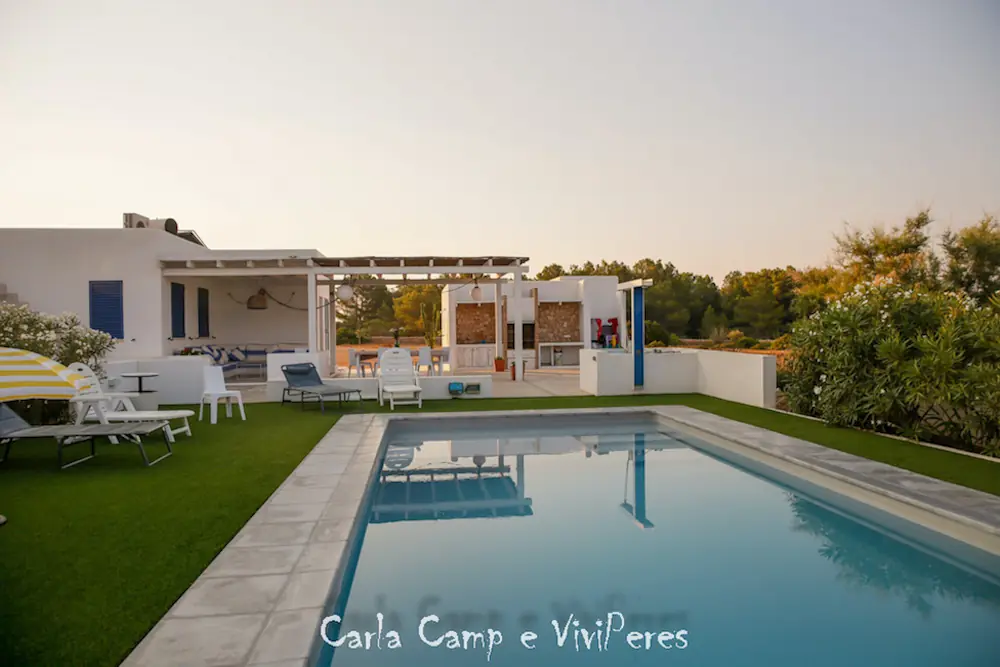
If this quiet island is what you're looking for, location is almost everything. In El Pilar de la Mola, about 800 metres from the village, is Can Javi de Palma, our family home. It's rented as a whole: three double bedrooms, two full bathrooms and a guest toilet, a private pool, garden, outdoor shower, children's play area and barbecue, for up to six adults.
It's the house where we spend our own holidays and which, for the rest of the season, we share with families and couples who come looking for this other Formentera. From here, the lighthouse, Es Caló and the Camí de Sa Pujada are just a few minutes away. You can see the house and book directly at canjavidepalma.es. Tourist licence ET6047.
FAQ
How many days do you need to see Formentera?
We recommend at least four or five days. With fewer you can see the main sights, but you miss the best thing about the island: its pace.
What is the quietest area of Formentera?
La Mola, in the east of the island: it's the highest part, the least crowded and the one that keeps its traditional rural character.
What is the best time to go?
May, June, September and October: good weather, the sea at a nice temperature and far fewer people than in July and August.
Do you need a car in Formentera?
It's not essential, but it helps, especially if you stay in La Mola. A bike works very well on the flat part of the island; the climb up to La Mola is demanding.
In the end, what makes Formentera special isn't one single spot, but the way you explore it: no impossible lists, and time to do nothing at all. Here, that's a plan in itself.
For more ideas to plan your trip, have a look at our page about Formentera island.