The beaches closest to El Pilar de la Mola are down below, at the foot of the plateau: Es Caló and Ses Platgetes on the north coast, and Caló des Mort and Es Arenals at the eastern end of Migjorn, on the south coast. From the village you reach them in about ten minutes by car (for Caló des Mort you also need to finish on foot). Up on La Mola itself there are no beaches: the plateau ends in cliffs above the sea. That may sound like a drawback at first, but it's exactly what keeps this part of the island quiet.
Here's what each one is like and how to choose depending on the wind, which in Formentera matters more than the map.
First things first: the wind decides
In Formentera the same beach can change a lot from one day to the next, and what matters most is the tramontana, the north wind.
- The north coast, where Es Caló and Ses Platgetes are, is known as the Tramuntana coast because it faces north. Formentera's official tourism website warns that at Ses Platgetes, on days when the tramontana blows hard, the sea gets quite rough. On those days, head to Migjorn instead.
- Migjorn, on the south coast, is usually sheltered from the prevailing summer winds, which makes it the most reliable option, including for families with children.
- Without tramontana, in summer, the water on the north coast is usually calm and turquoise.
Our tip: stop at El Mirador
On the way down from La Mola, halfway along the descent, you'll find the El Mirador restaurant. From there you can see both coasts at once: where the wind is coming from and which side has more or fewer waves. It's the best place to decide what you feel like that day, waves or calm water with no wind, and head for Es Caló or for Migjorn.
Our two favourites are, in fact, one on each coast: Ses Platgetes, next to Es Caló de Sant Agustí, and Migjorn at kilometre 11 of the main road, where the old Pirata Bus used to be. If the tramontana is blowing, Migjorn; if not, either of the two.
North coast beaches
Es Caló de Sant Agustí
Es Caló is less a beach than a small natural fishing harbour, with wooden boat huts and slipways (the "escars"), protected as a site of cultural interest since 2002. It's a good spot for a quiet swim and for a fish lunch.
It's also the starting point of the Camí de Sa Pujada, the old cobbled path that climbs up to La Mola. A good plan is to swim here early in the morning and walk up before the heat sets in (with comfortable shoes and water).
Ses Platgetes
Just 125 metres west of Es Caló you'll find Ses Platgetes: three small sandy beaches separated by rocky stretches, about 600 metres in total. You can walk there from Es Caló or use the access paths that lead straight from the road, and wooden boardwalks cross a small juniper area and the dunes.
It's usually not crowded and the seabed is good for snorkelling. There are no beach bars or sunbeds, but the fish restaurants of Es Caló are right next door. It's one of our favourites.
The downside: with strong tramontana, forget it. On those days the sea gets rough and you're better off crossing to the south.
South coast beaches: the eastern end of Migjorn
Migjorn is Formentera's longest beach, about five kilometres of sand and rock running along the whole south coast. It has several stretches with their own names, and the ones closest to La Mola are at the eastern end: Es Arenals, Es Copinar and, at the very end, Caló des Mort.
Migjorn at kilometre 11
This is our favourite stretch of Migjorn. You get there via one of the side roads that turn south off the main road, at kilometre 11, where the Pirata Bus stood for years. Sand, clear water and plenty of space to enjoy some peace.
Caló des Mort
A small, wild cove at the south-eastern tip of Migjorn, at the foot of low cliffs of marès (the island's sandstone), with a tiny strip of sand, turquoise water and fishermen's huts to one side. It's beautiful, but don't expect peace and quiet: it's always full. It's worth seeing, as long as you know what to expect.
You can only reach it on foot, along a path above the cliffs, and there is a risk of rockfalls, so respect the signs and don't sit under the rock walls. There are no services at all: bring water, something to eat and sun protection.
Es Arenals
Es Arenals is the opposite of Caló des Mort: fine, pale sand, dunes all around, shallow water for many metres, lifeguards, sunbeds and kayaks for hire, beach bars and restaurants. It's easy to reach from the La Mola road and has free parking.
For families with small children it's probably the most convenient beach in the area. On the other hand, it's not the quietest: it's one of the busiest stretches of Migjorn, especially in July and August. If you're after calm, go early in the morning or late in the afternoon, or walk a little along the shore and the crowds thin out.
Es Copinar, another stretch with a sandy seabed, is very close by. All along Migjorn there are many side roads heading south from the main road, and it's worth trying a few on different days.
Getting there from La Mola (and an honest warning)
From El Pilar de la Mola you head down the main road and in about ten minutes by car you're at Es Caló or Migjorn. For these beaches, in practice you need a car or a scooter. Cycling down is easy, but the ride back up to La Mola in the midday heat is hard work.
The upside: after a day at the beach you return to the highest, quietest part of the island. If you'd like to get your bearings on the map, there's more detail on our location page.
A host's tips for enjoying them
- Stop at El Mirador on the way down and look at the sea before choosing a coast.
- Go early. Before eleven in the morning any of these beaches is a different place: fewer people and better light.
- Bring your own shade and water to the coves without services (Caló des Mort, Ses Platgetes).
- Look after the posidonia and leave nothing behind on the sand.
At our house we leave bikes and beach gear for our guests, so there's no need to pack it all in your suitcase.
Where to stay near these beaches
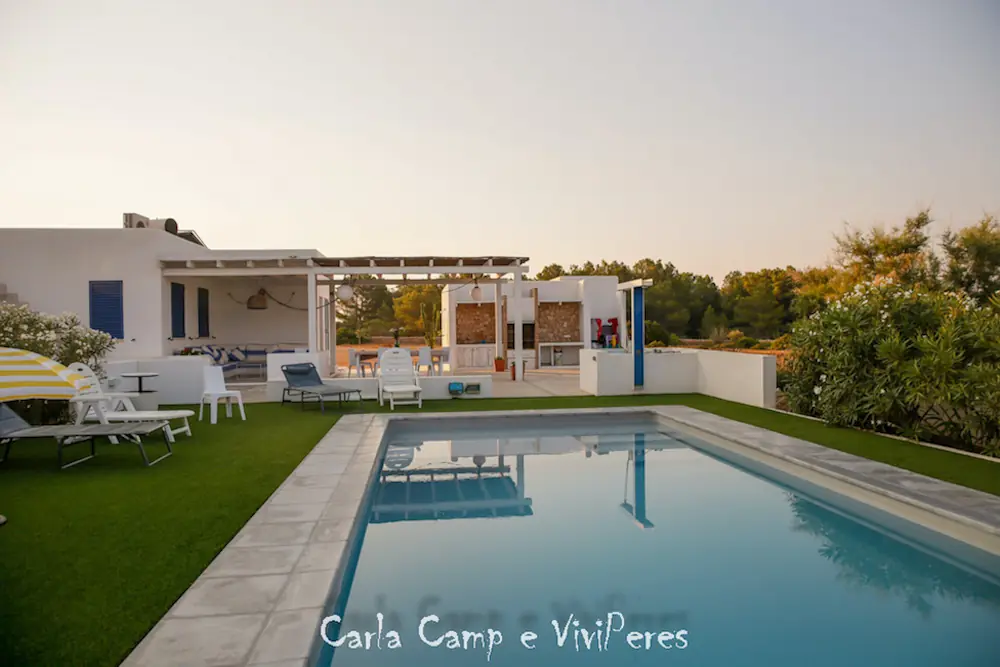
If you like the idea of having these beaches ten minutes away and coming back every evening to a quiet place, Can Javi de Palma is our family home, about 800 metres from the village of El Pilar de la Mola. It has three double bedrooms, a private pool, a garden and an outdoor shower to rinse off the salt when you get back, for a maximum of six adults (tourist licence ET6047).
If you're planning your trip, you may also find our quiet guide to what to see in Formentera useful, as well as the post about La Mola lighthouse, five minutes from the house. And if you already have dates in mind, you can check availability here.
And if you'd like more ideas for your days in Formentera, our page about Formentera island shares the corners we love most.
FAQ
Are there beaches in El Pilar de la Mola?
Not up on the plateau, which ends in cliffs. The nearest ones are down below: Es Caló and Ses Platgetes on the north coast, and Caló des Mort and Es Arenals on the south, about ten minutes by car from the village.
What is the quietest beach near La Mola?
Ses Platgetes is usually not crowded, and neither is our favourite stretch of Migjorn, at kilometre 11. Caló des Mort is lovely but always full, and Es Arenals is the most convenient, though also very busy in summer.
Which beach should I choose if the tramontana is blowing?
One on the south coast, in Migjorn. With strong tramontana, the north coast (Es Caló and Ses Platgetes) gets rough. If in doubt, stop at El Mirador on the way down from La Mola: from there you can see both coasts.
Which beach near La Mola is best for children?
Es Arenals: fine sand, shallow water for many metres, lifeguards and services. Migjorn is also usually sheltered from the prevailing summer winds.
Do you need a car to get to the beaches from La Mola?
In practice yes, or a scooter. Cycling down is easy, but the climb back up to La Mola is hard work, especially in summer.